
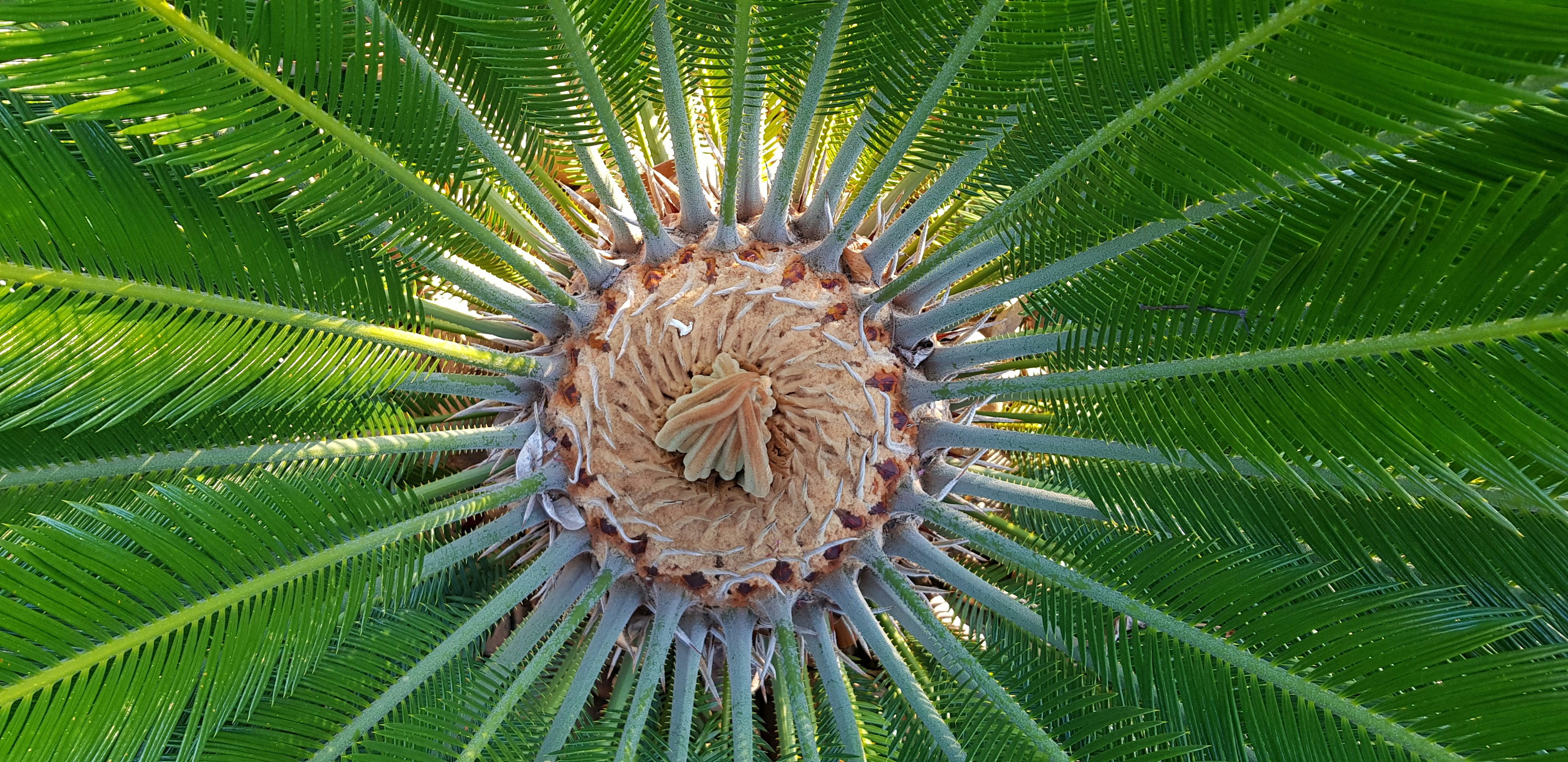
Introduction to Plant Structure
Plant structure serves as the foundational element in the study of botany, playing a crucial role in understanding how plants function and interact with their environment.
Essentially, the structure of a plant is comprised of three main components: roots, stems, and leaves. Each of these components has a specific function that contributes to the overall survival and efficiency of the plant.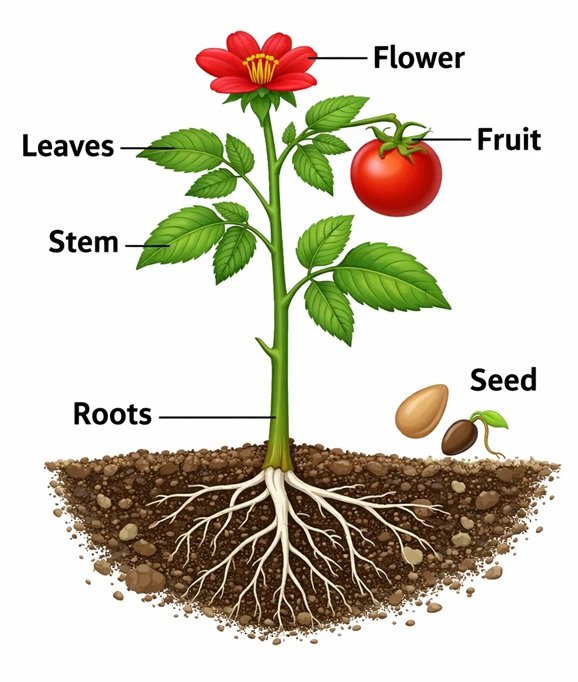
The roots of a plant anchor it to the soil, providing stability while also serving the critical function of nutrient and water absorption. They possess intricate systems that allow them to extract essential minerals and water from the soil, facilitating the plant’s growth and health. In times of drought or poor soil conditions, appropriate root development enables survival by drawing moisture from deeper layers of soil.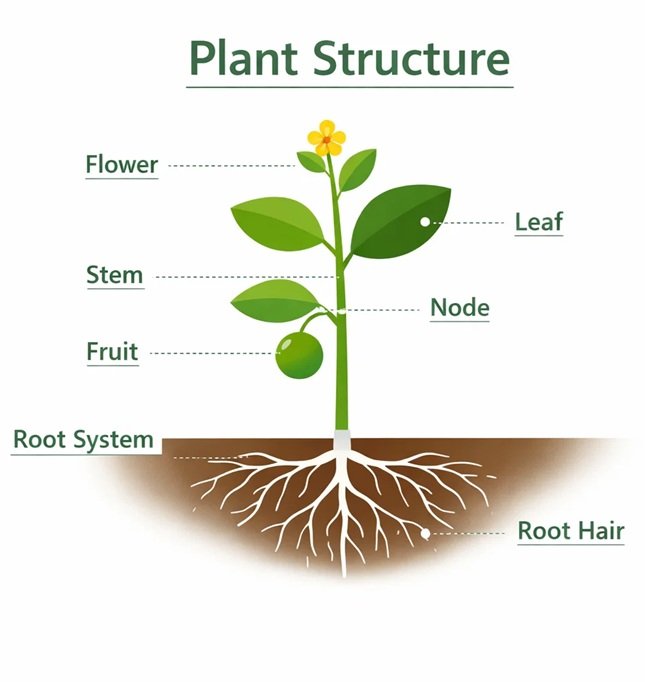
Stem structure is equally vital, as stems support the plant and transport nutrients and water between the roots and leaves. The xylem and phloem tissues within the stem play a complementary role; the xylem carries water upward, while the phloem distributes nutrients synthesized through photosynthesis. This transport system is essential for overall plant vitality and establishes a connection between various plant parts.
Leaves, often referred to as the primary site for photosynthesis, perform the crucial function of transforming sunlight, carbon dioxide, and water into glucose, which serves as food for the plant. The structural adaptations of leaves, including their broad surface area and specialized cells, optimize photosynthesis and contribute to the plant’s growth and energy balance. Adequate leaf structure also aids in water retention and gas exchange, further ensuring that the plant remains healthy in varying environmental conditions.
In summary, understanding plant structure—roots, stems, and leaves—is fundamental in botany. Each component plays a vital role in facilitating processes such as photosynthesis, nutrient absorption, and water retention, ultimately impacting the plant’s ability to thrive in its ecosystem.
Root Systems: Types and Functions
Root systems play a crucial role in the life of plants, providing them with stability, nutrients, and the ability to flourish in various environments. The two primary types of root systems are taproots and fibrous roots. Taproots are characterized by a single, thick primary root that extends deep into the soil, often with smaller lateral roots branching off. This structure enables tap-rooted plants to access water and nutrients located deep within the ground. Common examples of plants with taproot systems include carrots and dandelions.
On the other hand, fibrous roots are composed of many thin roots that spread out horizontally just below the soil surface. This type of root system is advantageous in situations where the soil is shallow or where surface moisture is more readily available. Grasses and many perennial plants exhibit fibrous root systems, which help prevent soil erosion and retain moisture effectively, making them well-suited for diverse ecosystems.
Beyond anchoring the plant, roots serve several vital functions. They are instrumental in the absorption of soil water and essential minerals, thus supporting the plant’s overall health. Additionally, roots store food in the form of carbohydrates, which becomes crucial during periods of dormancy or when the plant experiences insufficient sunlight or adverse weather conditions.
The structure and type of root systems vary among different plant species, often as adaptations to their specific environments. For instance, plants in arid regions may exhibit deep taproot systems to reach moisture, while those in nutrient-rich, moist environments might develop a fibrous root structure to maximize nutrient intake. Understanding these variations in root systems assists researchers in applying conservation strategies and improving agricultural practices, ultimately benefiting plant life and ecosystems broadly.
Stems and Their Role in Plant Growth
Stems are vital structures in plants, serving multiple functions essential for growth and development. They primarily act as the support system for leaves, flowers, and fruits, positioning them to maximize exposure to sunlight for photosynthesis. Structurally, stems can be classified into two main types: herbaceous and woody. Herbaceous stems are typically softer, green, and flexible, while woody stems are characterized by their hardened, lignified structure, allowing for greater support and longevity.
The anatomy of a stem is composed of several layers, including the epidermis, cortex, and vascular tissue. The vascular tissue is particularly significant, as it consists of xylem and phloem. Xylem is responsible for the upward transport of water and dissolved minerals from the roots to the foliage, while phloem distributes the photosynthesized nutrients from the leaves to other parts of the plant. This intricate system of transportation is crucial for maintaining plant health and facilitating growth.
Growth patterns in stems can be categorized into primary and secondary growth. Primary growth occurs at the tip of the stem and is responsible for increasing the length of the plant, which occurs through the activity of apical meristems. Secondary growth, on the other hand, involves the lateral meristems that increase the thickness of the stem, allowing the plant to support more weight and survive in various environmental conditions. This growth is particularly evident in woody plants, contributing to their robustness.
Additionally, stems exhibit various adaptations depending on the species and environment. For instance, some plants have developed specialized stems such as rhizomes or tubers for storage, while climbing plants may have tendrils for support. These adaptations enable plants to thrive in diverse habitats, showcasing the importance of stems in their overall growth and survival.
Leaves: The Photosynthesis Powerhouses
The leaves of a plant play a crucial role as the primary sites for photosynthesis, the process by which plants convert sunlight into energy. The structure of leaves is intricately designed to maximize their efficiency in this essential biological function. One key feature of leaves is their broad surface area, which allows for increased light absorption and carbon dioxide capture. This adaptation is vital for optimal photosynthesis. The arrangement of leaves on a stem, known as phyllotaxy, also contributes to their effectiveness by minimizing shading from adjacent leaves, ensuring that each leaf has adequate access to light.
In terms of physical structure, leaves can be classified as simple or compound. A simple leaf, having a single expanded blade, is effective in light capture, while compound leaves, which consist of multiple leaflets, may provide advantages in terms of wind resistance and reduced water loss. Both types have their unique adaptations, enabling plants to thrive in various environments. For instance, plants in arid climates often develop smaller, thicker leaves to reduce transpiration while maintaining photosynthetic capabilities.
Chlorophyll, a pivotal pigment found in the chloroplasts of leaf cells, is integral to the photosynthetic process. It absorbs light energy, primarily in the blue and red wavelengths, and subsequently converts it into chemical energy. Additionally, stomata, tiny openings on the leaf’s surface, regulate gas exchange by allowing carbon dioxide to enter while facilitating the release of oxygen. The presence and density of stomata can vary considerably, influencing a plant’s overall efficiency in carbon capture and transpiration rates. Variations in leaf structure, therefore, play an important role in determining how well a plant can adapt to its specific environmental conditions, ultimately impacting its growth and survival.