
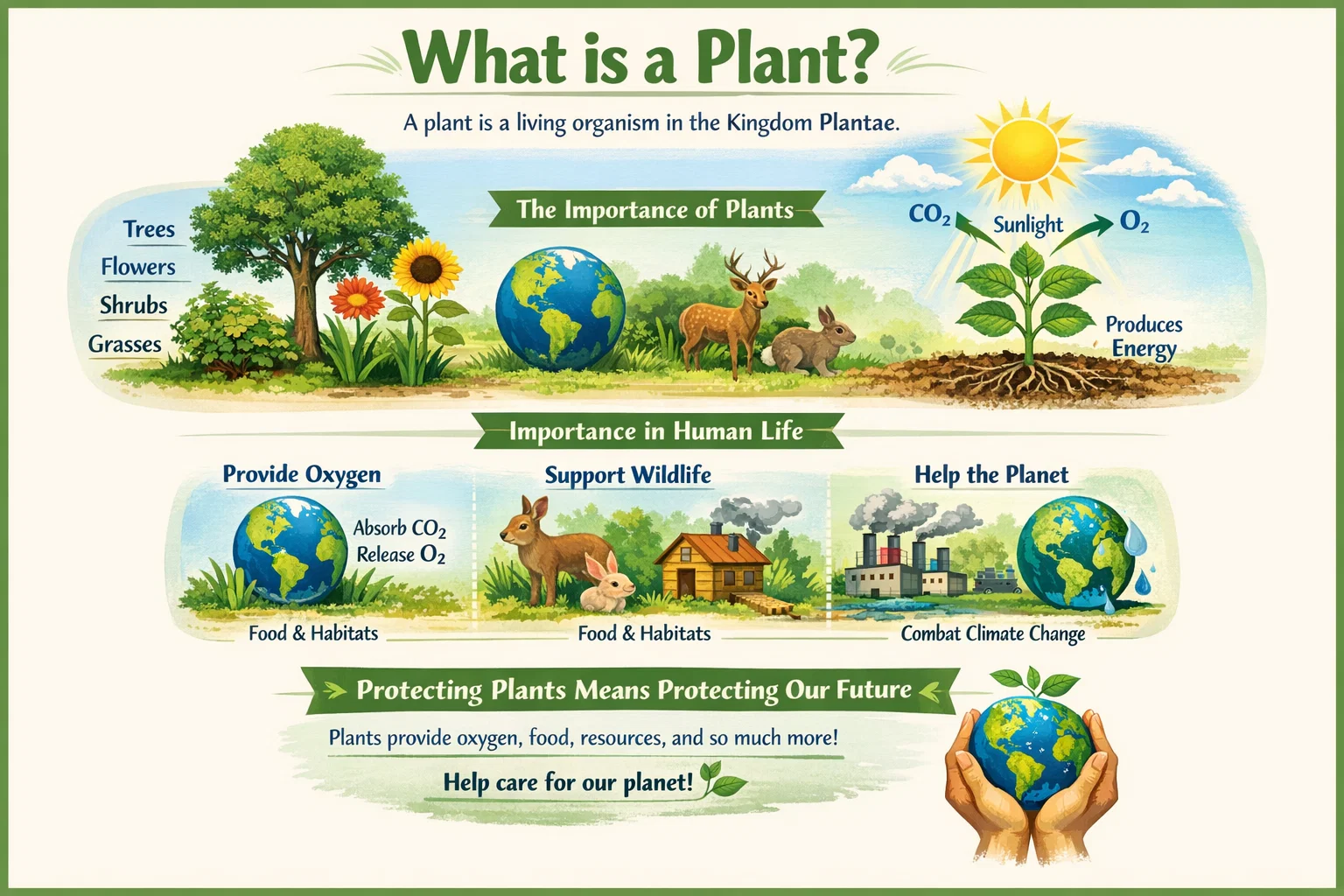

What is a Plant?
A plant is a living organism that belongs to the kingdom Plantae. Plants are primarily multicellular, predominantly photosynthetic eukaryotes, meaning they use sunlight to produce energy through the process of photosynthesis. They play vital roles in ecosystems by providing oxygen and food, serving as habitat, and assisting in various biogeochemical cycles. Examples of plants include trees, shrubs, grasses, and flowering plants.
The Importance of Plants
Plants are essential for life on Earth for numerous reasons. Firstly, they are foundational to food chains, supporting herbivores, which in turn feed carnivores. This makes plants integral to sustaining biodiversity. Moreover, plants absorb carbon dioxide and release oxygen, playing a crucial role in maintaining atmospheric balance and combating climate change.
Table 1: What is a Plant & Its Importance
| Topic | Explanation |
|---|---|
| Definition of Plant | A plant is a living organism belonging to the kingdom Plantae. |
| Cell Type | Plants are multicellular eukaryotes with complex cell structures. |
| Nutrition Mode | They are photosynthetic, meaning they use sunlight to produce food through photosynthesis. |
| Examples | Trees, shrubs, grasses, and flowering plants. |
| Ecological Role | Plants provide oxygen, food, and habitat, and support ecosystems. |
| Role in Food Chain | They form the base of food chains, supporting herbivores and indirectly carnivores. |
| Environmental Importance | Plants absorb carbon dioxide and release oxygen, helping in climate regulation. |
| Contribution to Biodiversity | They sustain a wide variety of living organisms and ecosystems. |
| Human Benefits (Food) | Provide fruits, vegetables, and grains essential for nutrition. |
| Human Benefits (Materials) | Supply fibers like cotton and flax and materials like timber for construction. |
| Medicinal Value | Many plants are sources of medicines and therapeutic compounds. |
| Overall Importance | Essential for life, environmental balance, and human survival. |
Importance in Human Life
Beyond ecological functions, plants significantly contribute to human life. They provide numerous resources, including food, clothing, and shelter. Fruits, vegetables, and grains are fundamental to nutrition and health. Furthermore, plants such as cotton and flax yield fibers for textiles, while timber is used for building materials. Additionally, many medicinal compounds are derived from plants, showcasing their role in healthcare.
In conclusion, understanding what plants are and recognizing their importance is key to appreciating their role in our environment and daily life. By protecting plant life, we ensure a healthier planet for future generations.